

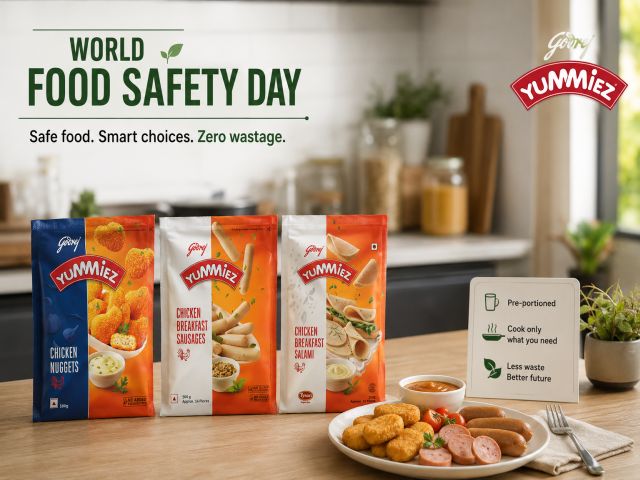
World Food Safety Day, marked each year by the United Nations along with WHO and FAO, is about one simple truth: safe food practices start at home. The day reminds us that food safety is everyone’s responsibility, from farmers and producers to families in their kitchens. For urban households, managing kitchens efficiently while reducing food waste has become increasingly important as people look for healthier, more sustainable ways of living.
Fresh produce and proteins often spoil quickly during humid months, leading to unnecessary wastage. The USDA Food Safety and Inspection Service (FSIS) cautions that bacteria such as Salmonella, and Campylobacter multiply rapidly between 4°C and 60°C the “Danger Zone” doubling in as little as 20 minutes. To counter this, many families are turning to frozen and Individually Quick Frozen (IQF) foods, which let them cook only what they need while keeping nutrition, taste, and quality intact for longer.
Food safety isn’t just about storage it’s also about knowing where food comes from and how it’s handled. The farm-to-fork approach builds transparency and trust, giving consumers confidence in the meals they prepare.
Equally important is learning to read food labels. Terms like “BBE” (Best Before End), “IQF” (Individually Quick Frozen), “HPP” (High Pressure Processing), and “FD” (Freeze Dried) help consumers make smarter choices about freshness, shelf life, and storage.
Anushree Dewen, Head of Marketing & Innovation at Godrej Foods, said: “At Godrej Foods, we believe food safety is not just a standard it’s a promise. From sourcing to packaging, we are embedding safety practices at every step. More people today are choosing frozen foods because they want convenience without compromising on hygiene or nutrition. By offering options that help reduce waste and keep meals wholesome, we’re supporting safer and smarter kitchen habits for urban homes.”