

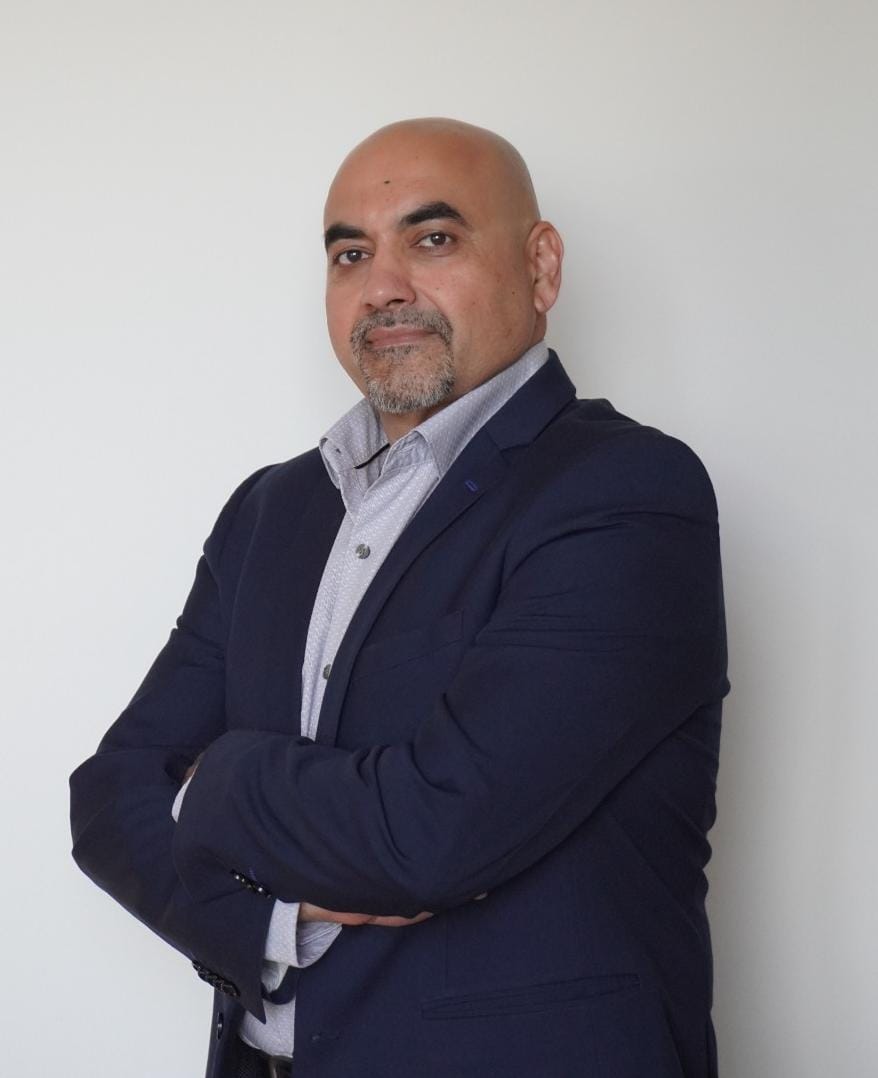
Mr. Sanjay Laul, Founder at MSM Unify
The majority of overseas graduates are familiar with a certain frustration. They complete their degree in a nation you wish to work in. They obtain the credentials, are driven, and frequently pick up the language as well. However, both must happen more quickly than the bureaucratic clock permits, with the job offer coming before the visa and the visa coming before the job. Because the entry point for working legally was created for someone who already had everything in place before they came, many competent individuals wind up abandoning nations that truly need them.
Germany recognized this issue and developed an alternative.
What is the Chancenkarte?
Under Germany’s Skilled Immigration Act, the Chancenkarte was introduced in June 2024. It permits skilled professionals from outside the EU to relocate to Germany without receiving a job offer and to look for qualified employment for up to a year. During that time, it allows holders to work up to twenty hours a week in a part-time capacity.
That combination is more important than it may seem. The ability to work part-time while job-hunting means a graduate is not burning through savings on a countdown clock. Instead of taking the first offer that comes in out of desperation, they can pay for living expenses, develop professional relationships naturally, and take the time to locate a career that truly fits their skills.
Trial employment is one of the Chancenkarte’s special features. Holders are permitted to conduct working interviews with numerous employers for a maximum of two weeks at a time. This eliminates one of the main concerns German firms have about hiring people they haven’t worked with before by allowing them to evaluate a candidate on the job before signing a formal contract.
This is a structural benefit that most other visa categories do not provide for an Indian engineer entering a nation where their professional network is completely empty.
The points system and who qualifies
The Chancenkarte employs a four-category point-based evaluation system. To be eligible, you must have at least six points. Points are given for age, language proficiency, work experience, and educational background. Three points are awarded for a bachelor’s degree. Two points are awarded for three or more years of relevant job experience. One point is awarded for B2 or higher English proficiency. Two points are awarded for being under 35.
A twenty-four-year-old fresh Indian IT graduate with a university degree, B2 English, and no prior work experience would receive precisely six points—just enough to be eligible. Adding a few years of work experience or proficiency in German raises the application’s score and enhances it even further. The Chancenkarte employs a four-category point-based evaluation system. The transfer to an EU Blue Card or work residency visa can start as soon as full-time skilled employment is obtained.
For German university graduates, the pathway is even cleaner
The Chancenkarte is mostly intended for foreign-born professionals. A different and more generous option is available to international students who finished their degree in a German university.
Section 20(3) of the Residence Act allows graduates of German institutions to request an 18-month extension of their post-study employment search. This extension permits unlimited work throughout the search period, in contrast to the Chancenkarte’s twenty-hour part-time cap. Graduates are free to accept any position, whether full-time or part-time, as long as it fits their level of qualification.
It is worthwhile to sit with that distinction. Until they are prepared to switch to a long-term permit, a student who spends three years obtaining a German engineering degree has eighteen months of unrestricted work rights in one of Europe’s most robust manufacturing and technology economies. There is no cap on hours, and employer sponsorship is not necessary.
Europe is not a single destination. It is a network of options.
The most well-defined post-study work mechanism in Europe is Germany’s Chancenkarte, however it doesn’t function alone. Because all of Europe’s member nations are facing the same structural issue as Germany is, the continent as a whole has been subtly become more competitive as a post-study employment destination.
The majority of the major US IT companies’ European headquarters are located in Ireland, which has a two-year post-study work permit. In one of Europe’s most globally focused labor markets, the Netherlands’ Zoekjaar orientation year provides twelve months of unrestricted, flexible job seeking. The twelve-month job-seeker permit in Spain is accompanied by thirty hours of allowed weekly work throughout the degree itself, as well as a cost of living that is much lower than its counterparts in northern Europe.
There is an underlying reality that unites these. In an effort to be kind to overseas students, European governments do not provide post-study employment pathways. They are providing them because the holes their economies are creating cannot be filled by their own worker streams. Germany’s most open acknowledgement of that disparity is the Chancenkarte. The twelve-month no-obligation search time, the trial employment option, and the points system are all based on the practical reality of what it takes for a qualified foreign professional to actually land in a country, find a decent work, and commit to staying.
The broader shift international students should notice
In 2026, Europe will make up the majority of the nations actively working to retain overseas graduates. Canada has tightened eligibility requirements and imposed restrictions. There is active political pressure on the US post-study track. The cost of a post-study visa in Australia has risen.
Europe has taken the other course. The Chancenkarte was introduced by Germany. For Indian master’s degree holders, France introduced a five-year Schengen visa. The Netherlands extended its provisions for orientation years and startup visas. These policy experiments are not accidental. They demonstrate a shared understanding that foreign graduates can help address a labor market issue that domestic educational systems are unable to resolve on their own.
The direction of travel is just as important to students doing the long planning horizon assessment about where a degree is most likely to convert into a secure, well-paying employment with a clear path to permanent settlement as any particular university’s ranking. One component of the image is the Chancenkarte. It is located within the bigger continent.